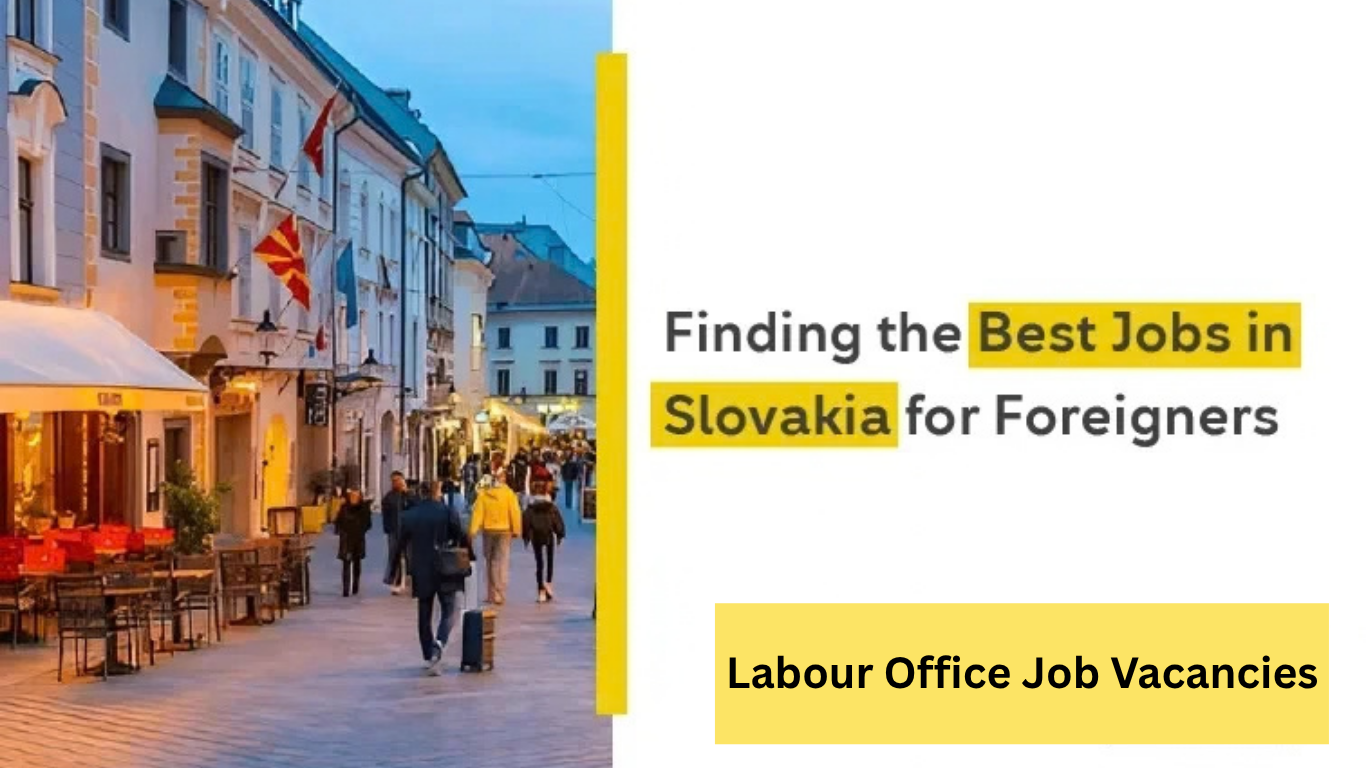
Looking for a Job in Slovakia

Finding a job in Slovakia can be a good opportunity for EU citizens who want to work in another European country. When searching for employment, it is important to focus on opportunities that match your qualifications, professional experience, language abilities, and practical skills.
Before applying, prepare a professional CV, job application, and cover letter. You should also make sure you understand the employment, residence, social-security, and documentation requirements that apply to your situation.
This guide explains the main steps EU citizens should consider when looking for employment in Slovakia.
What to Consider When Looking for a Job in Slovakia
Start your job search by identifying positions that match your professional background and experience.
Consider:
- Your education and qualifications
- Professional competencies
- Previous work experience
- Language skills
- Practical and technical skills
- Driving licence and other relevant qualifications
- Professional certificates and training
A well-prepared application can make it easier for employers to understand your experience and suitability for a position.
Main Questions for EU Citizens Looking for Work in Slovakia
If you are planning to work in Slovakia, several important questions should be considered:
- What documents should an EU citizen prepare before arriving in Slovakia?
- Where can you search for job vacancies?
- How should you apply for a job?
- What should you do if you become unemployed in Slovakia?
- Which organizations can EU citizens contact?
- What happens if you do not comply with the applicable requirements?
What Documents Should an EU Citizen Prepare Before Arriving in Slovakia?
Before travelling to Slovakia for employment, it is recommended that you prepare your accommodation, finances, employment documents, and personal paperwork in advance.
Arrange Accommodation
Try to secure suitable accommodation before arriving in Slovakia. Having a confirmed place to stay can make the transition to a new job and country easier.
Prepare Sufficient Financial Resources
Bring enough financial resources to cover your living expenses until you receive your first salary.
This can help cover accommodation, food, transportation, and other initial expenses.
Check Residence and Employment Requirements
Find out which residence registration procedures, permits, and employment requirements apply to your individual situation.
EU citizens generally benefit from the freedom of movement for workers within the European Union, but specific registration and administrative requirements may still apply.
Obtain an Employment Contract
Where possible, arrange an employment contract or future employment contract before travelling to Slovakia.
Before accepting a position, carefully check:
- Employer details
- Working conditions
- Salary
- Health insurance arrangements
- Social-security contributions
- Workplace location
- Type of work
- Employment duration
- Working hours
- Other contractual conditions
Check Recognition of Qualifications
If you intend to work in a regulated profession, determine whether your foreign education or professional qualifications need to be formally recognized in Slovakia.
The requirements can depend on the profession and the qualifications involved.
Important Documents to Bring
EU citizens travelling to Slovakia for work should consider bringing the following documents:
- Valid passport or national ID card
- Driving licence
- European Health Insurance Card
- Portable Documents such as PD U1 and PD U2, where applicable
- Education certificates
- Professional qualification documents
- Certificates confirming professional experience
- Official Slovak translations of documents when required
- Professional CV in Slovak
- Passport-size photographs
- Criminal record certificate if requested by the employer
It is advisable to keep important documents safely organized and readily accessible.
Where Can You Search for Jobs in Slovakia?
There are several ways to find job vacancies in Slovakia.
Labour Office Job Vacancies
The Central Office of Labour, Social Affairs and Family and local labour offices maintain information about available job opportunities.
Current vacancies can be found through the employment-services system operated by the Ministry of Labour, Social Affairs and Family of the Slovak Republic.
EURES – European Employment Services
The EURES network supports the free movement of workers within Europe.
The EURES system provides information about:
- Job vacancies in EU/EEA countries and Switzerland
- Living conditions
- Working conditions
- Labour-market information
- Employment opportunities
EURES advisers can also help jobseekers understand the Slovak labour market and provide information about living and working in Slovakia.
Employment Agencies
Non-public employment services can also assist jobseekers.
These may include:
- Employment agencies
- Temporary employment agencies
- Supported employment agencies
When using an agency, carefully verify the employer, employment conditions, salary, and any fees or contractual obligations before accepting a position.
How to Apply for a Job in Slovakia
A strong application can make an important first impression on a potential employer.
Depending on the vacancy, you may contact the employer personally or by telephone and submit your application by email or post.
Your application should be professional, clearly written, correctly formatted, and free from unnecessary errors.
Prepare a Professional Job Application
A job application should generally not exceed one A4 page.
Its purpose is to introduce you to the employer and encourage them to invite you for an interview.
Your application should normally include:
- Full name
- Address
- Telephone number
- Email address
- Position you are applying for
- Where you found the vacancy
- Possible starting date
- Relevant work experience
- Education
- Professional skills
- Other relevant competencies
The application should be properly formatted and signed where required.
It should also include the appropriate consent for processing personal data.
Write a Short Cover Letter
A cover letter should be concise and focused on the position you are applying for.
Explain:
- Why you are interested in the position
- What experience you can bring
- Which skills are relevant
- Why you could be a suitable candidate
Avoid repeating your entire CV. Instead, use the cover letter to highlight the experience and abilities that are most relevant to the specific vacancy.
Prepare Your CV
Your CV should have a clear and easy-to-read structure.
Depending on the position, include:
- Personal details
- Education
- Professional qualifications
- Employment history
- Language skills
- Practical skills
- Driving licence
- Professional certificates
- Training courses
- References
The Europass CV format is a recommended option for presenting your qualifications and experience in a standardized European format.
What If You Become Unemployed in Slovakia?
EU citizens are entitled to access employment services under the applicable European rules.
If you are unemployed and looking for work in Slovakia, you may register as a jobseeker with the relevant labour office.
Registration may be completed in person or electronically, depending on the available procedure.
Exporting Unemployment Benefits
If you are receiving unemployment benefits from another EU country, you may be able to continue receiving those benefits while looking for employment in Slovakia, provided that you meet the applicable conditions for exporting unemployment benefits.
You generally need to arrange the export of your unemployment benefit before leaving the country that provides the benefit.
PD U2 Document
The PD U2 document is used when unemployment benefits are exported to another country while the recipient searches for work there.
After arriving in Slovakia, the jobseeker must register with the relevant labour office within the applicable period.
According to the provided guidance, registration should take place within 7 calendar days from the date you ceased to be available to employment services in the country that granted the unemployment benefit.
The PD U2 document should also be submitted to the Social Insurance Agency as required.
How Long Can Benefits Be Exported?
Export of unemployment benefits is generally allowed for three months.
In exceptional circumstances, this period may be extended to six months, subject to the applicable rules and approval.
The unemployment benefit continues to be paid by the institution in the country that originally granted the benefit.
Who Can EU Citizens Contact?
If you need information or assistance while looking for employment in Slovakia, several organizations may be relevant.
EURES – European Employment Services
EURES can provide information and assistance concerning employment opportunities, labour-market conditions, and working and living conditions within Europe.
Ministry of Labour, Social Affairs and Family
The Ministry provides information concerning employment policy, labour matters, and related areas in Slovakia.
Central Office of Labour, Social Affairs and Family
The Central Office and local labour offices provide employment-related services and information for jobseekers.
Social Insurance Agency
The Social Insurance Agency deals with social-insurance matters, including relevant unemployment-benefit procedures.
Sanctions and Compliance Requirements
EU citizens receiving exported unemployment benefits must comply with the obligations imposed by the relevant labour office.
This can include complying with jobseeker registration requirements and other conditions connected with receiving unemployment benefits.
What Happens If You Are Removed From the Jobseeker Register?
Deregistration from the jobseeker register can result in the loss of any remaining unpaid portion of an exported unemployment benefit.
For this reason, jobseekers should carefully follow all instructions provided by the relevant authorities and report changes in their circumstances when required.
Final Checklist for EU Citizens Looking for Work in Slovakia
Before travelling to Slovakia or accepting a job, consider completing the following checklist:
- Secure accommodation
- Prepare sufficient money for your initial expenses
- Check residence and employment requirements
- Verify the employer
- Review the employment contract
- Confirm salary and working conditions
- Check health-insurance arrangements
- Check social-security contributions
- Confirm the workplace and type of work
- Check whether your qualifications require recognition
- Prepare your passport or national ID card
- Bring your driving licence where relevant
- Obtain a European Health Insurance Card
- Prepare applicable PD U1 or PD U2 documents
- Prepare education and professional certificates
- Prepare a professional CV
- Prepare a cover letter
- Bring translations where required
- Check whether a criminal record certificate is needed